Press "Enter" to skip to content

Posts published in “Guest”

The Lockdown Skeptic They Couldn’t Silence

Targeted for censorship in March, Aaron Ginn is becoming an influential voice in cities, states and Washington

Does a pandemic demand the strong medicine of censorship? Social-media companies seem to think so. They’re taking steps to control speech in the name of combating the spread of medical misinformation. Facebook employs “fact checkers” to review posts, makes those that don’t pass their test harder to find, and directs users to purportedly reliable sources like the World Health Organization. YouTube has taken down videos it deems inconsistent with science. Twitter plans to add warning labels to tweets that don’t pass muster with “subject-matter experts, such as public health authorities.”

Aaron Ginn’s story is a cautionary tale that even well-intended censorship can overreach, suppressing the search for truth. Mr. Ginn, 32, is the Silicon Valley technologist who posted an essay on March 20 titled “Evidence over hysteria—COVID-19” on the Medium website. Citing academic research and government data, Mr. Ginn argued that public-health experts were focusing too much on “flattening the curve . . . while ignoring the economic shock to our system” of shuttering businesses and schools and ordering Americans to stay home.

“When 13% of Americans believe they are currently infected with COVID-19 (mathematically impossible),” he wrote, “full-on panic is blocking our ability to think clearly and determine how to deploy our resources to stop this virus.” The message was well-timed—the day he posted it, Gov. Andrew Cuomo ordered “nonessential” New York businesses to close.

Mr. Ginn’s essay drew 2.6 million page views in 24 hours—and a barrage of liberal criticism. Carl T. Bergstrom, a University of Washington biologist, called it “Shakespeare run through google translate into Japanese, then translated back to English by someone who’d never heard of Shakespeare.” Then Medium took it down, saying it violated rules under a “risk analysis framework we use for ‘Controversial, Suspect and Extreme content.’ ”


Continue Reading in The Wall Street Journal

How to reopen society using medical science and logic

As of the first week of May, more than 66,000 Americans have died from the COVID-19 pandemic. Given that three to four weeks typically elapse before death, thousands more who are already infected will also succumb to the virus. That said, the direct toll from the infection has markedly declined throughout the United States, including the epicenter of New York. The curves have been flattened – the stated goal of the isolation has been accomplished – for both hospitalizations per day and deaths per day.

We now have an even greater urgency, due to the severe and single-minded policies already implemented. Treating COVID-19 “at all costs” is severely restricting other medical care and instilling fear in the public, creating a massive health disaster, separate from a potential world poverty crisis with almost incalculable consequences.


Read in The Hill


Read and comment here on The Red Line

The Economic Lockdown Catastrophe

The worst jobs report in history shows why the economy must reopen.

When we wrote on March 19 about “Rethinking the Coronavirus Shutdown,” the reaction in elite media quarters was horror and denunciation. Well, after Friday’s horrific jobs report, how do you like the shutdown now? The people who said we have to sacrifice the economy to crush the virus have succeeded in the former even as the virus will be with us for many more months or longer.

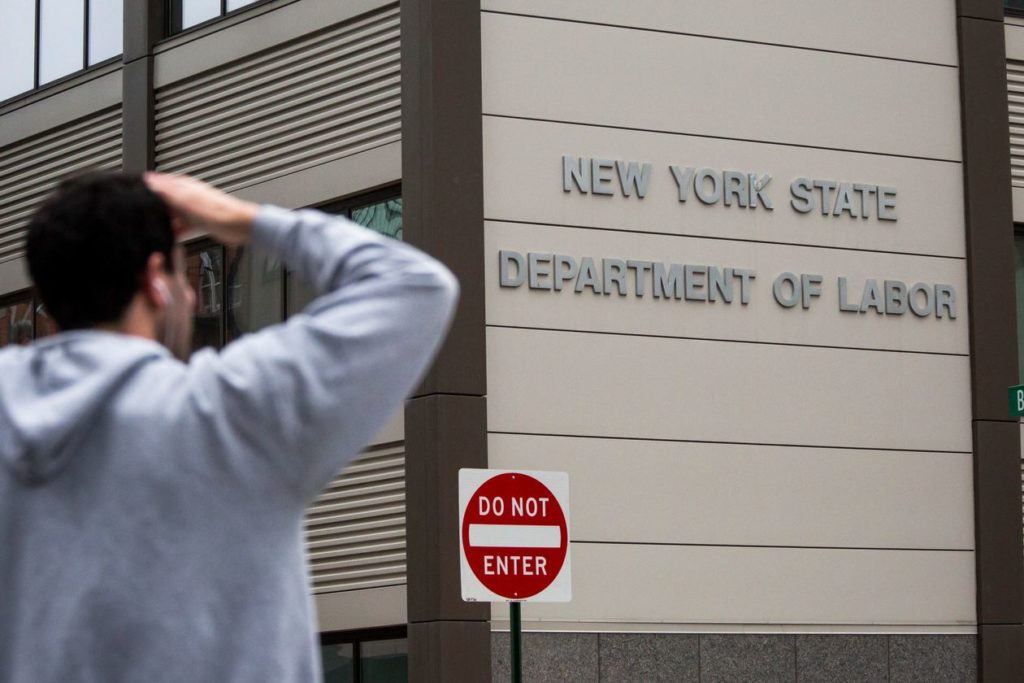
Unemployment in April soared to 14.7%—the highest rate since the government started keeping records in 1948—while employers shed 20.5 million more jobs after losing 870,000 in March. The labor-market bleeding is even worse than those numbers suggest since 6.4 million workers left the workforce.


Read in The Wall Street Journal

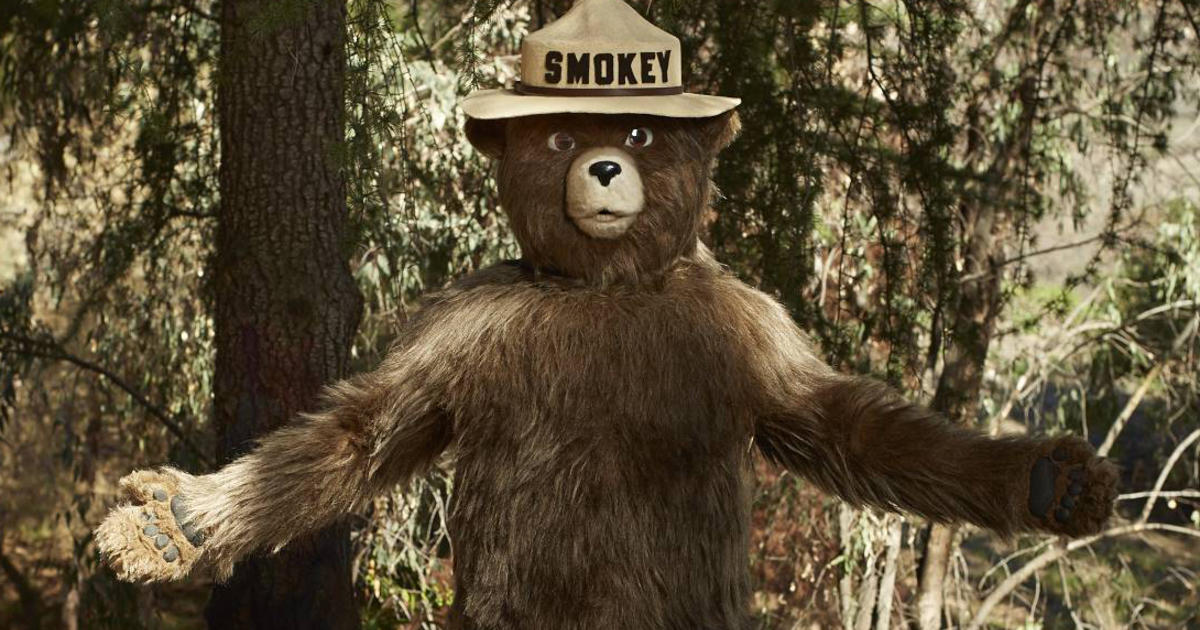
COVID-19 and the underbrush theory. Why Smokey Bear is the problem

The “Underbrush Theory,” helps to explain what has happened.

The Underbrush Theory states that there is a natural rate of attrition (a.k.a., deaths) for any population, and reducing deaths for several years below this natural rate (e.g., perhaps because of lucky guesses on the right flu vaccine, more flu vaccinations, improving sanitation, better public health programs, better medical care, new drug discoveries, etc.), just means Mother Nature’s bill is inevitably going to be higher in some subsequent year when she throws a novel flu cocktail at us.

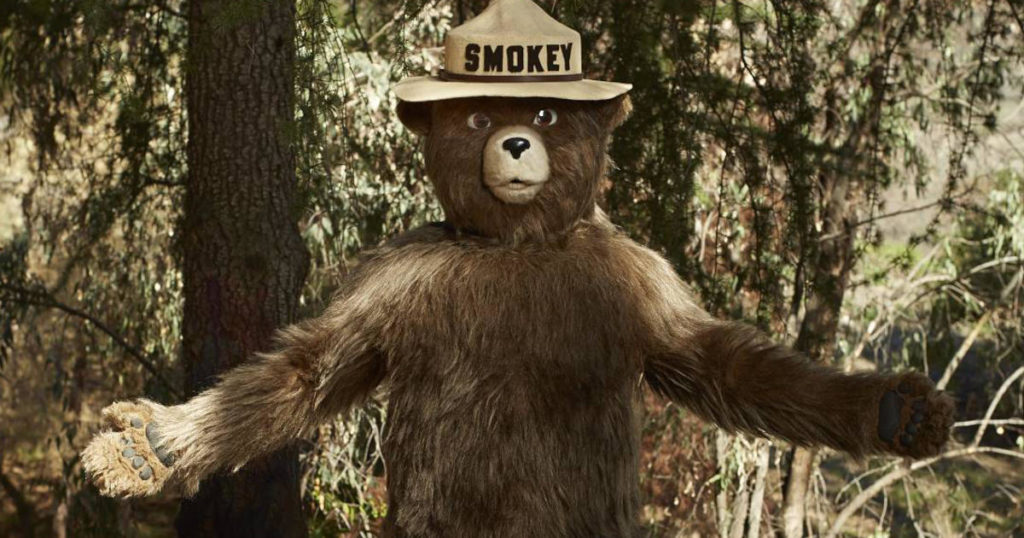
It’s like Smokey Bear preventing forest fires for so long that the underbrush accumulates to feed what inevitably becomes a much bigger, more destructive fire in some future year (think California and Australia). We must all remember that old age is still lethal — no one is getting out of here alive. The only question is what the proximate cause of death will be. Flu-related deaths are and always have been the default option for many old people.

Read in CT Mirror


Read and comment here on The Red Line

Connecticut state employees on track for $135 million raise as other states delay wage increases

Democratic governors in New York, Pennsylvania and Virginia are temporarily suspending raises for state employees or freezing pay until they can better understand the fiscal impact of the pandemic, but, thus far, Connecticut state employees are still scheduled to receive a second pay increase, projected to cost taxpayers $353 million.

The second round of wage increases is set for July 1, the start of the 2021 fiscal year, and is comprised of a 3.5 percent general wage increase, combined with an annual step increase of 2 percent.

Paragraph


Read at Yankee Institute


Read here on The Red Line

COVID-19 Hysteria Reigns Supreme – Meanwhile Many More Die Regularly of Other Causes Without Any Talk of Shutdowns

As you know, the coronavirus—if you catch it, and get very sick—is a terrible thing to go through and you may even die. The virus and the fear of it are sorely testing our medical capacity in some places... The heroic efforts and sacrifice of many doctors, nurses, and volunteer civilians are all notable and praiseworthy. Millions of Americans are pulling together. We all know this.

Did you know the chances of recovery from the coronavirus are about 98%—if you catch it? Did you know this?... We are getting conditioned to a lot of panic because of the wide range of speculation about other numbers we accept as our new fright-inducing reality, an increasingly confusing and frenzied set of numbers. And the normalization of our panic is having dire consequences and augurs for even worse.

Our officials and media have warned us of 2 million deaths in the United States. Then 200,000 deaths. Then 100,000 to 240,000. This needs to stop. There have been a total of 68,000 coronavirus deaths worldwide. And we are told we will see, just in America, three to four times that number. Does that even pass the plausibility test?

Continue Reading:

Read in Real Clear Politics


Read and comment here on The Red Line

Shutdown is killing the economy — and is also no good for our health

President Trump has announced that he is aiming toward Easter Sunday to start getting the economy up and running again. This has triggered heavy opposition. There is a serious debate about how much destruction to the economy we are willing to tolerate to save lives from the coronavirus. It seems cold hearted, even cruel, to assess the costs versus the risks of policy actions when lives are at stake.

But guess what? Government officials have to make these decisions all the time. If the only goal of government is to minimize deaths, then the first step would be to prohibit people from driving cars. We do not do that because we have decided as a society that benefits for 320 million Americans of having reliable transportation outweigh deaths on the highway.

This is also why President Trump, along with governors and mayors across the country, need to acknowledge that the lockdown of the economy also carries health risks and unintended consequences. You cannot crush the economy without having a significant degree of human misery and even deaths, not counting the loss in dollars of wealth and income.

A study by the National Survey of Drug Use and Health found the rate of drug addiction could be as much double for those who are unemployed as for those who are employed full time.


Read in The Hill

Read and comment here on The Red Line

A study by the National Survey of Drug Use and Health found the rate of drug addiction could be as much double for those who are unemployed as for those who are employed full time.


Read in The Hill

Read and comment here on The Red Line

A GREATER DEPRESSION?

With the COVID-19 pandemic still spiraling out of control, the best economic outcome that anyone can hope for is a recession deeper than that following the 2008 financial crisis.

NEW YORK – The shock to the global economy from COVID-19 has been both faster and more severe than the 2008 global financial crisis (GFC) and even the Great Depression. In those two previous episodes, stock markets collapsed by 50% or more, credit markets froze up, massive bankruptcies followed, unemployment rates soared above 10%, and GDP contracted at an annualized rate of 10% or more. But all of this took around three years to play out. In the current crisis, similarly dire macroeconomic and financial outcomes have materialized in three weeks.

Not even during the Great Depression and World War II did the bulk of economic activity literally shut down, as it has in China, the United States, and Europe today. The best-case scenario would be a downturn that is more severe than the GFC (in terms of reduced cumulative global output) but shorter-lived, allowing for a return to positive growth by the fourth quarter of this year. In that case, markets would start to recover when the light at the end of the tunnel appears.

Read in Project Syndicate

Read and comment here on The Red Line

The Worst of the Global Selloff Isn’t Here Yet, Banks and Investors Warn

The most brutal stretch for global markets since the financial crisis likely isn’t over yet, say investors and analysts who believe it is too early to assess the possible scale of economic damage from the coronavirus.

In just a few weeks, U.S. stocks have lost roughly a third of their value, and investors have even fled assets like U.S. government bonds and gold that typically do well during times of turmoil.

But many analysts and portfolio managers warn that by historical standards, stocks’ declines look modest. The S&P 500 is down 32% from its February peak. In comparison, stocks tumbled 57% during the financial crisis and 49% after the dot-com bubble burst in 2000.

Analysts at Goldman Sachs Group Inc. said this past week they expect U.S. economic output to tumble 24% in the second quarter.

If economic output shrinks by double-digit percentages in the second quarter, it would be a devastating pullback even by historical standards: Adjusted for inflation and seasonality, GDP fell less than 5 percentage points from peak to trough during the 2007-09 recession, which was the longest downturn since World War II.


Read in The Wall Street Journal

Rethinking the Coronavirus Shutdown

No society can safeguard public health for long at the cost of its economic health.

Financial markets paused their slide Thursday, but no one should think this rolling economic calamity is over. If this government-ordered shutdown continues for much more than another week or two, the human cost of job losses and bankruptcies will exceed what most Americans imagine. This won’t be popular to read in some quarters, but federal and state officials need to start adjusting their anti-virus strategy now to avoid an economic recession that will dwarf the harm from 2008-2009.


Read in The Wall Street Journal