
All eyes have been on AI leaders Anthropic and Nvidia, twin bellwethers for AI – and, in fact, for the stock and bond markets and for the whole economy.

Eyes should also have been on Uncle Sam, whose fiscal and financial wellbeing is just as dependent on the success of AI.
The two AI leaders have diverged. The oversubscribed Anthropic IPO raised the largest amount ever for an IPO, and valued the company at an eye-popping $1.5 trillion.
In stark contrast, Nvidia, which is central to the data center buildout, has lost an even greater amount in stock value – more than $2 trillion in the last month.
This is schizophrenic. No data centers, no AI.
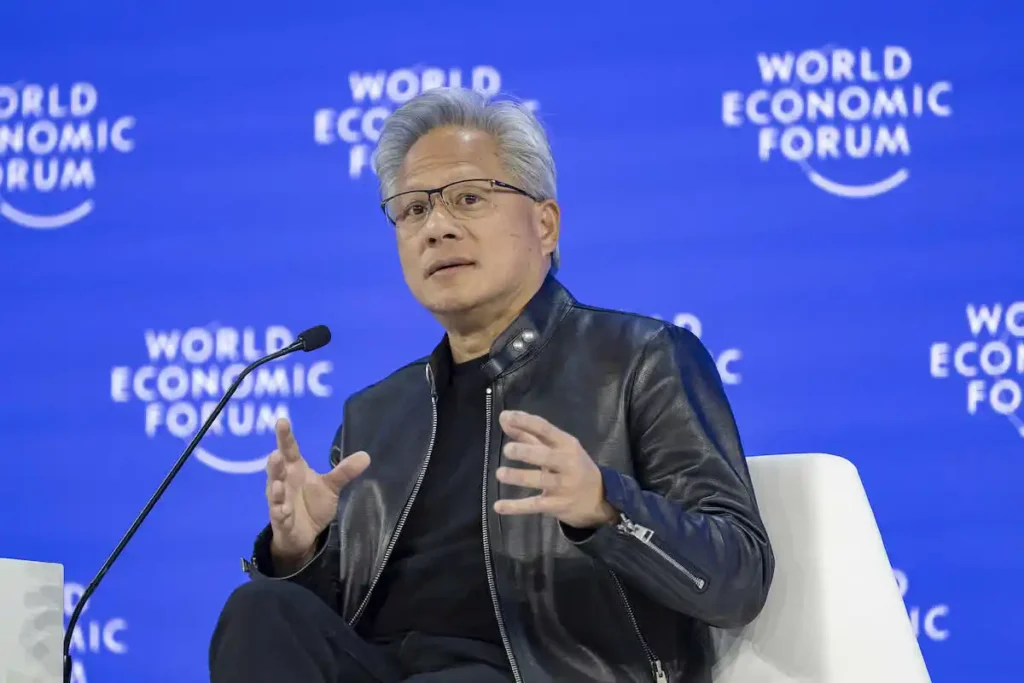
Then, late last week, the stock market collapsed in implicit recognition of this contradiction. No doubt, the market rout and yesterday’s dramatic rebound were amplified by the controversy and confusion surrounding Nvidia’s Jensen Huang’s triumphant return as CEO.
The recent pull-back on Nvidia was prudent, with the markets pulling in the reins on the AI buildout’s circular financing excesses of which Nvidia represents the extreme.
The specialty AI chip maker has extended aggressive seller financing, guaranteed third-party customer debt, invested in customers and, finally, tried to take a cut of customers’ future revenue. This was mostly to create a new data center industry segment called neoclouds, startups which lack the creditworthiness to obtain financing on their own.
Yet, Nvidia’s overaggressive policy aligns with the reality that AI cannot succeed unless tens of new data centers are built with millions of AI chips installed.
Almost overnight, Uncle Sam has become critically AI-dependent. AI has suddenly become the beating heart of the economy, and Uncle Sam depends upon accelerating economic growth to outpace our rapidly growing national debt.
Treasury debt has doubled since the onset of COVID and now equals GDP for the first time since World War Two. It has grown a half-trillion dollars just since August and, at $40.5 trillion gross, it is now within $600 billion of the current debt ceiling.
Net interest has more than doubled in the last four years to $1.05 trillion fiscal year ended last September. Net Interest is the Achilles Heel of the federal government. It absorbed one of seven dollars of federal spending last fiscal year.
This fiscal year, things will get worse. The markets have gotten nervous.
Back in September, the so-called bond vigilantes went into mini-revolt, pushing up interest rates sharply. The Federal Reserve increased the short-term policy interest rate by a quarter percent. And after last week’s hot inflation report, the market has been expecting the Fed to increase the policy rate at least another quarter percent in early December.
That would push the interest rate on all $7.7 trillion currently outstanding short-term T-Bills up 0.50% to 4.25% by February. That would generate additional interest expense of $38.5 billion. If more T-Bills were sold to cover half of the $2.0 trillion trendline deficit, that new borrowing would add another $42.5 billion of interest expense.
Interest costs have been rising on long-term Treasuries too, mainly $16.6 trillion of Treasury Notes. I decided to give Anthropic’s Claude AI model a crack at calculating the cost.
I did not give Claude any detailed instructions. Within seven minutes, Claude found and analyzed 51 Note issues totaling $2.93 trillion that mature over the next twelve months, projecting that interest on their refunding would generate about $29 billion of additional interest expense ($54 billion annualized).
I confirmed Claude’s results, finding the 51 issues in the Monthly Statement of the Public Debt; they had a weighted average coupon of 2.94%. The weighted average original maturity was 4.4 years, the current market interest rate for which is about 4.85% according to the Treasury Department’s Daily Market Rates report.
Clause’s $29 billion interest estimate doesn’t include interest on new Notes sold to cover the other half of the budget deficit: $24.3 billion or $48.5 annualized.
The point of this calculation is twofold. AI is already an enormous productivity aid.
Secondly, federal interest costs look to continue to increase inexorably. That is, unless last week’s stock market collapse was a harbinger of recession, in which case rates wouldn’t go up. Instead, Uncle Sam’s volume of borrowing would explode as income tax revenue collapsed.
In either case, federal spending will increase, given the inevitable growth of Medicare, Medicaid and Social Security, whose benefits we know are increasing 3.6% in 2027.
AI’s potential is tremendous, but unless today’s market sentiment reverses and leads promptly and with conviction to AI’s success, we face a fiscal / financial crisis that leaders in the financial world have been predicting for some time.
We need both Anthropic and Nvidia need to succeed. The rout of Nvidia and the whole stock market even amidst the euphoria surrounding Anthropic’s IPO does not bode well for the future. Nor, ironically, does the dramatic rebound one day later. It just conveys lack of direction and conviction.



Red Jahncke is a nationally recognized columnist, who writes about politics and policy. His columns appear in numerous national publications, such as The Wall Street Journal, Bloomberg, USA Today, The Hill, Issues & Insights and National Review as well as many Connecticut newspapers.