

If you are reading the election results in Connecticut as meaning voters think that the state will do better under the Democrats, don’t. The election takeaway is simple. As he wished, Donald Trump was effectively on the ballot and he lost – big time. Republican candidates didn’t lose and their policies didn’t.

Most voters voted against Trump, ignoring almost all state and national issues. They put aside the state’s perilous fiscal condition, for which Democrats are responsible having held power for decades.
Trump even trumped the number one issue in the election, both nationally and in Connecticut: affordability, even though Connecticut is a painfully unaffordable state, which is also the work of Democrats.

State government remains mired in fiscal woes, and, it is no exaggeration to say that citizens have experienced slow-motion impoverishment. The Dems have pulled off an amazingly damaging two-fer.
At The Townsend Group, which I head, we prepare The Connecticut Scoreboard under an ongoing mandate from Nutmeg Research Initiative. The Scoreboard is a compendium of metrics providing a multidimensional assessment of the Nutmeg State’s overall condition and quality of life.
Under a section entitled “Cost of Living,” we compile the essentials of household expenses – taxes and energy costs. The picture is not pretty. The average household in this state struggles under a burden near-twice the national average: about $23,000 annually versus $14,000 across the fifty states.
There is one central driver of the state’s unaffordability: public sector compensation. The Scoreboard provides the latest available data from the U.S. Census Bureau. Connecticut’s 60,000 state employees received the second highest wages among the 50 states – an average of $101,500 as of March 2025. That’s more than $14,000 above the 50-state average.
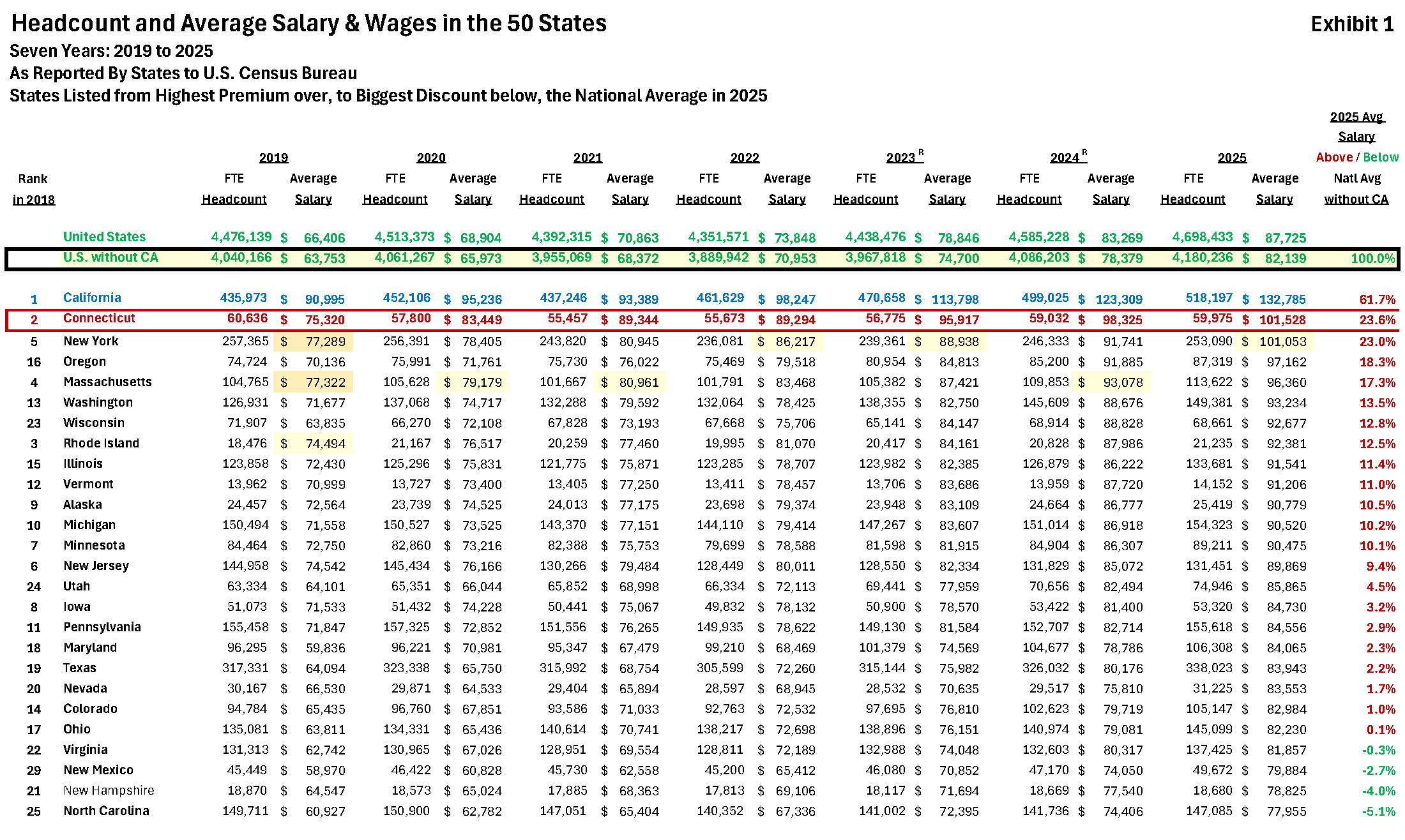
How can the state afford to pay such lavish wages?
Is it fiscally prudent? But more fundamentally, is it fair? Census discloses that the average wage for all workers in Connecticut – public and private – is $56,200 (including state workers). Should all the other workers in the state pay high taxes so state employees can be paid almost twice their own wages? Is it fair?
Unfairness has only gotten worse. Just a few months after March 2025, Governor Lamont awarded state employees two more 4.5% annual wage increases, one paid retroactively and one going forward – both in effect for the fiscal year ended this past June 30th. Then, on this past July 1st, another 4.5% wage increase took effect. Doing simple math, that means state employees are now making an average of $117,000.
But what does this have to do with affordability? First, it means that state employees are insulated from the state’s unaffordability.
Beyond that we need to look at aggregate figures. The Scoreboard lists the Census figure for the total annualized state payroll of $6.1 billion as of March 2025. That jibes with the actual total for calendar 2025 as tallied by the Office of the Connecticut State Comptroller.
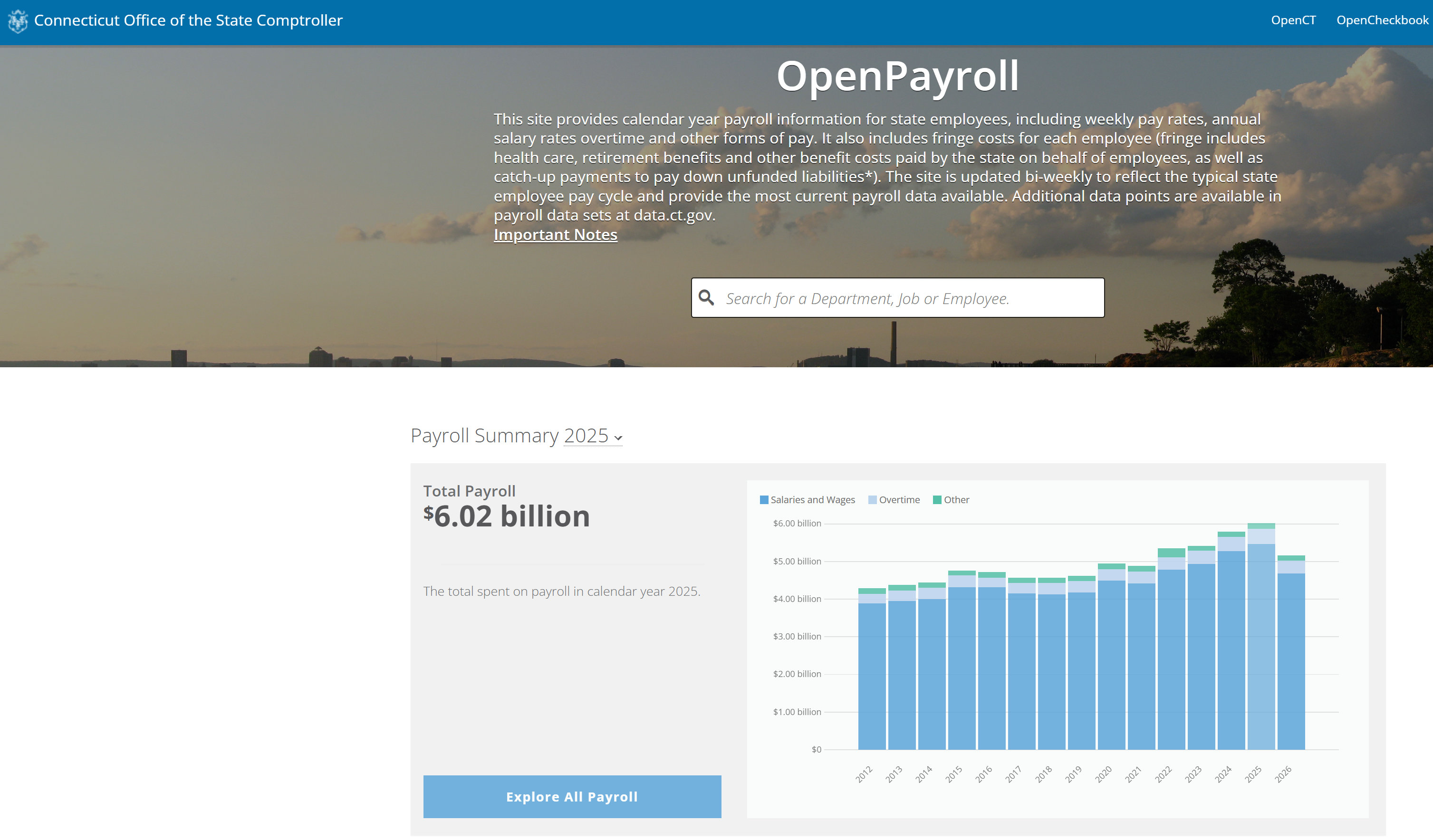
The Comptroller’s figures for 2025 show $2.7 billion in pension costs and about $1.3 billion of non-retirement benefit costs, including, confusingly, health care benefits cost for both active and retired state employees. That’s over $10 billion in annual compensation cost in 2025.
That’s over one-third of the $28.6 billion state budget adopted for fiscal 2027.
But the real issue is that the state has been doling out this high level of compensation, while incapable of meeting the cost from operational resources. According to the most recent data compiled by The Reason Foundation, Connecticut has $12,229 of unfunded public pension debt (state and local) per capita, the second highest level of the 50 states. It has the fourth highest unfunded retiree health care obligations at $6,484 per capita.
Every man, woman and child in Connecticut is on the hook eventually to pay over $19,000 to state employees – not to build roads, fund education, attract businesses to, and keep companies in, the state. The state has issued “only” $11,300 in long-term bonded debt per capita for those and other purposes. “On the hook” means citizens are paying the high taxes cited above to service this debt.
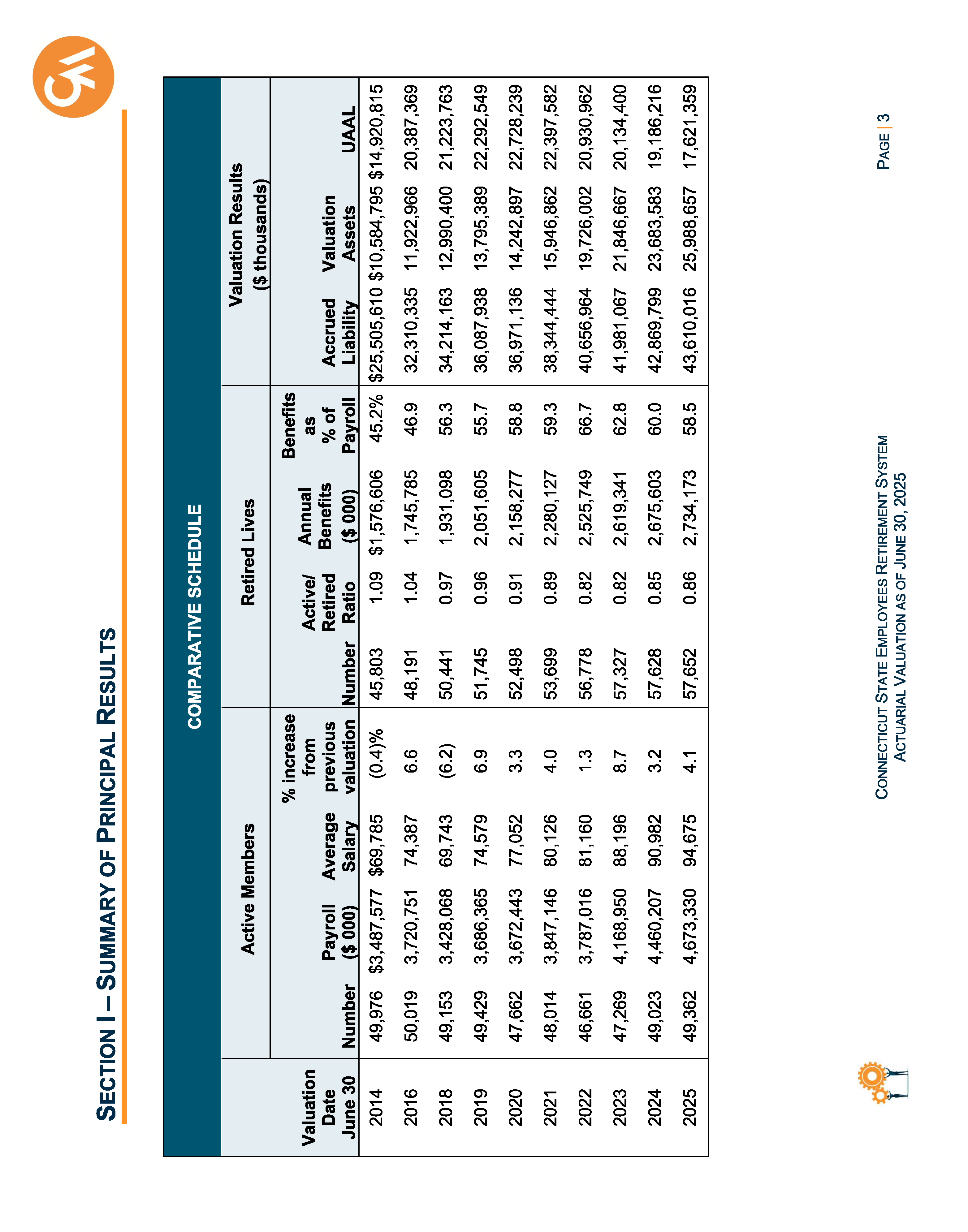
It is even worse. Governor Lamont has given state employees such large wage increases that the pension liability has grown. Pensions are based upon wages. When wages increase, so do future pension costs. Under Lamont, future pension costs (“Accrued Liability”) have increased $10 billion dollars as average wages for the largest segment of workers have increased from $74,500 to $94,700 (in mid-2025) according to the 2025 Report of the Actuary for the main state employee pension fund. The 2026 Report is due imminently.
Connecticut is a government of state employees, run by state employees and for state employees – and their Democrats allies. Only secondarily is there any concern that it should be affordable for citizens.



Red Jahncke is a nationally recognized columnist, who writes about politics and policy. His columns appear in numerous national publications, such as The Wall Street Journal, Bloomberg, USA Today, The Hill, Issues & Insights and National Review as well as many Connecticut newspapers.