
President Trump does not to have a clear strategy in Iran, despite that the objective is clear, namely, to deny Iran a nuclear bomb. The general approach has been apparent: punish Iran until it capitulates.

Except that military punishment has ceased. Now, it is economic warfare. The outcome depends on which side can outlast the other. Can Iran survive the U.S. naval blockade and stricter sanctions enforcement longer than the global economy can survive Iran’s closure of the Straight of Hormuz?
What are the president’s strategic options? In common parlance: go long, go home or go big.

We have been going long. The expected outcome has been a long-term agreement somehow limiting Iran’s nuclear program, although the recent suspension of peace negotiations raises doubt about this outcome.
The president could declare victory and go home without an agreement. He could say that we destroyed Iran’s bomb-making capacity last June in Operation Midnight Hammer, and, now, Operation Epic Fury has destroyed the industrial base required to manufacture the bomb, missiles and other arms. He could say that we can repeat the two operations in the future as needed.
How about going big? We could go big by addressing the core of the entire century-long regional conflict: the status of the Palestinians.
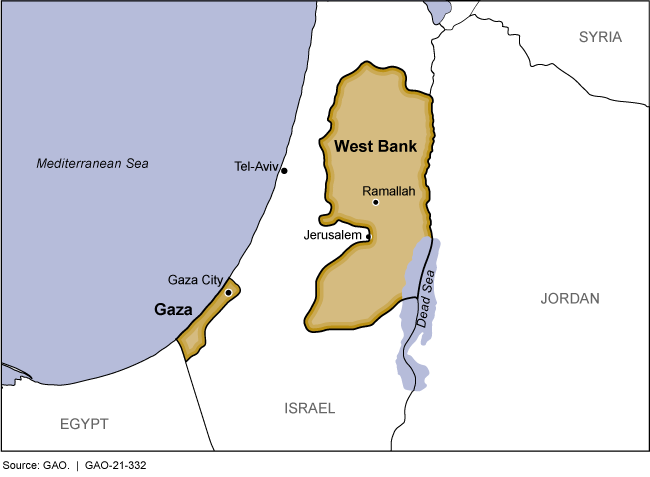
Iran might give up its whole nuclear program in return for the establishment of a Palestinian homeland (not state) in the West Bank and Gaza. Over virtually the entire history of “two-state solution” saga, there has been a semantic dance about sovereignty. Israel’s conception is to offer a “state” to the Palestinians, but retain security control over the entire area, i.e. including the Palestinian state. How is that different from the status quo?
What could change things is the U.S. assuming security responsibility for the Palestinian homeland, working together with troops from Arab nations, in the form of a permanent protectorate in the West Bank and Gaza.
Related Content: A Peace Proposal: A Protectorate for Palestinians – Oct 2023 and April 2024
Israel asserts a legitimate right to exist, but rarely mentions the coequal right of the Palestinians. Both rights came into existence via the 1947 U.N. partition of the Holy Land into a homeland for Jews and one for Palestinians. The former exists, the latter does not. There’s blame on both sides, overwhelmingly so in the case of Hamas but also in Israel’s de facto push to seize all the land from the sea to the river.
While Israel and the U.S. have been focused simply on denying Iran the bomb, that overlooks why Iran wants it: primarily as an umbrella for continued attacks on Israel to advance the Palestinian cause. If a Palestinian homeland is established, arguably that cause goes away. In fact, how could Iran use a bomb on the Holy Land without wiping a Palestinian homeland off the face of the earth along with “the Zionist entity.” Even now, they can’t without killing Palestinians living in these occupied territories.
Arguably, simply denying Iran the bomb is too limited an objective. No matter what is achieved by Operation Epic Fury, the Mideast will still be a greater mess than ever before. With every cycle of confrontation, the overall situation gets worse. In this instance, the “resistance” has been pulverized but remains intact, albeit without Iran’s support – Hezbollah in Lebanon, the Houthis in Yemen. While inactive, Hamas still governs Gaza.
Related Content: “Hamas Cannot Be Destroyed… Hamas is an idea…rooted in the hearts of the people” – IDF Spokesman
The regional damage is catastrophic. Gaza is rubble, as is southern Lebanon. Gulf state oil production facilities and other infrastructure is severely damaged. Iran’s industrial infrastructure has been largely destroyed.
The costs of recovery will be astronomical, Gaza alone an estimated $70 billion. The Gulf states paid most of the cost of the Gulf War in 1991, comprised only of the military expenses of the U.S. and allies. Now, there are again military costs, but also massive costs to rebuild industrial and civilian infrastructure as well. With over $30 trillion in national debt, the U.S. is in no position to finance recovery. The administration requested a one-half trillion dollar increase in the Pentagon budget, including the estimated $25 – $35 billion cost of the war before the ceasefire and to replenish key armaments that were already in low supply before the war.
Nor can wealthy Gulf sheikdoms reprise 1991, with their damaged oil production facilities requiring expensive repairs. The U.A.E. has already requested financial aid from the U.S.
Only a fool would say that denying Iran a nuclear bomb will solve all of this. Indeed, only a wide-eyed optimist would say that it will solve any of this.
That brings us back to the origin of all the conflict and misery: the Israeli – Palestinian conflict.
Current practical realities warrant first attention. Can 7.5 million Israeli Jews occupy and control two million Gazans, 2.7 million on the West Bank, over a million now homeless in south Lebanon. Then there are 1.7 million restive Palestinian citizens of Israel. At some point, all this becomes unmanageable, and, even beforehand, Israeli life becomes consumed by little other than the ugly business of occupation.
Perhaps spurred by these practical pressures, there’s already been talk of “encouraging” “voluntary emigration” (what an oxymoron) of Gazans. Apart from the immorality of dispossessing people of their native land, emigration where? Surrounding nations that have just sustained major damage have little capacity to absorb newcomers. The Western world is closing down immigration.
Moving to the equities, the case is obvious. Two homelands were promised.
Settlement of the overall Mideast conflict may be the best way to deny Iran the bomb, ameliorate current conditions and prevent future cycles of ever worsening hostilities. Yet, what would a Palestinian homeland look like? The key metric is security. What would deliver safety to Israel and freedom to Palestinians?
Bilateral solutions have failed. Clearly, two conventional states cannot coexist. When the various parties were trying to devise a day-after plan for Gaza, they focused on an international peacekeeping force replacing the IDF. If that was the preferred solution in Gaza, why not also in the West Bank?
Such a force would have to be powerful and balanced. A joint U.S. – Arab force would meet those criteria. If President Trump is willing to commit troops to combat operations in Iran, he should be willing to commit them to peacekeeping.
Moreover, if the U.S. has gone to full scale war with Iran to guarantee Israel’s security from a nuclear “existential threat,” then we should be willing the provide the same guarantee against a conventional existential threat that might emanate on the ground from a Palestinian homeland. The difference is timeline. A peacekeeping presence would have to be permanent, like the U.S. commitment in South Korea. The intense hatred between Israelis and Palestinians will last for another century.
Israelis and Palestinians would resist, each articulating an opposite version of the other’s messianic vision: Palestinians crying “from the river to the sea” and Israel seizing and settling ever more land from the sea to the river. Thus, the need for a solution imposed by third parties.
After four wars in the Mideast – the Gulf War, Afghanistan, Iraq and, now, Iran – Americans are sick of this disastrous repetitive cycle. If we are going to protect Israel, we should do it in a way that settles the overall conflict and prevents a fifth war, a sixth…
An overall settlement with the creation of a permanent protectorate for the Palestinians is more possible and more urgent than ever before and still the preferred outcome. It may not be likely, but, if the President achieved this end-state, it would be easy to see robust Congressional and worldwide support, mid-term election results far better than now expected and a Nobel Peace Prize at better than even odds.



Red Jahncke is a nationally recognized columnist, who writes about politics and policy. His columns appear in numerous national publications, such as The Wall Street Journal, Bloomberg, USA Today, The Hill, Issues & Insights and National Review as well as many Connecticut newspapers.