

A month ago, U.S. Census released data showing that Connecticut paid its state employees an average of $101,500 in 2025, the second highest wages in the 50 states.

The news of wages moving from five figures to six figures, cresting $100,000 for the first time, grabbed widespread attention.
That was not the only reason the news was noteworthy. Within days, Democrat super-majorities in the General Assembly approved four more years of robust 4.5% annual wage increases negotiated by fellow Democrat, Governor Ned Lamont.
The new increases will take Connecticut’s average state salary to about $121,000 in 2029, about 60% higher than Connecticut’s average salary of $75,000 in 2019 when Lamont first took office. In aggregate terms, the state payroll will climb from $6.0 billion now to $7.2 billion in 2029. That’s just wages, not including the high cost of the state employees’ very generous health care and pension benefits.
Stunning as the news was, these overall averages are anonymous numbers. They are unattached to any government agency or any specific group of workers. The figures incite the question: who is making one hundred grand? Who is getting a 60% pay hike? Who is making the second highest wages in the 50 states?
Fortunately, Census provides some broad answers. Census breaks down the headcount and payroll figures for the 50 states into 36 functional categories. Actually, 15 categories comprise over 98% of the aggregate state payroll of the 50 states and of Connecticut’s payroll.
In a brief study for Nutmeg Research Initiative, The Townsend Group, which I head, parsed the Census functional data for Connecticut in terms of the premium paid over the national average in the 15 major categories.
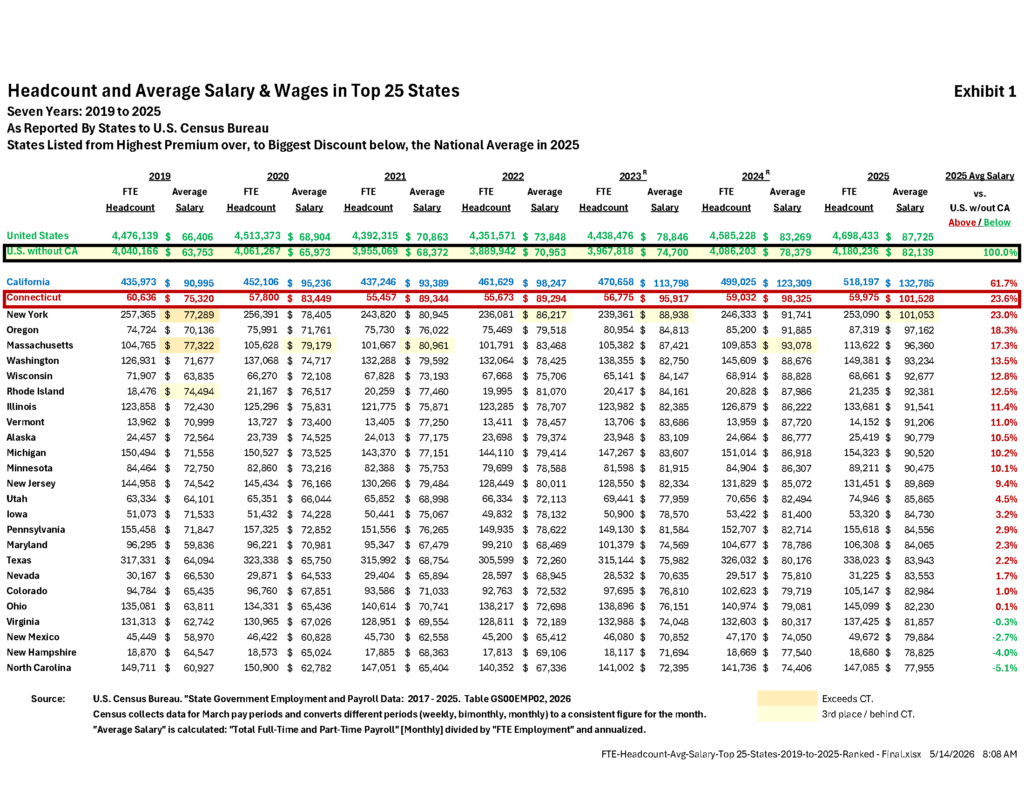
Connecticut’s average state wage is 15% higher than the 50-state average and 24% higher than the 49-state average excluding California. In Townsend’s analysis, California is excluded from the national average, because its average wage is so high, 30% higher than second-place Connecticut, and its workforce is so big, 50% larger than the second-largest workforce in Texas.
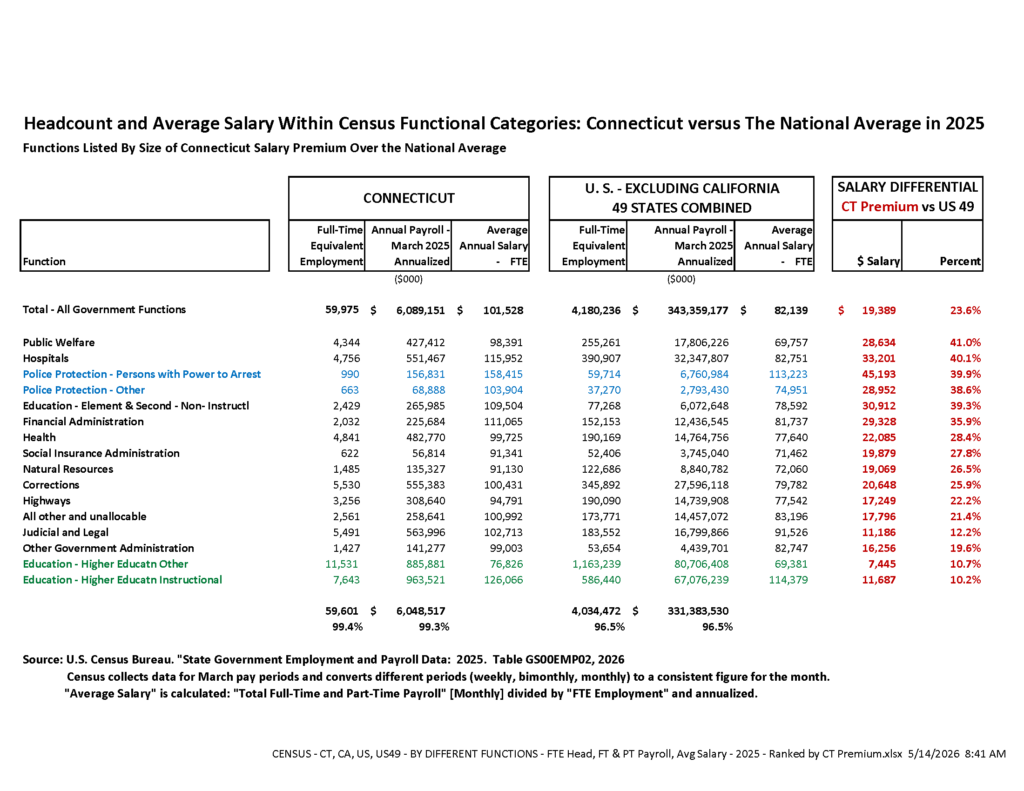
In Census Bureau’s “public welfare” functional category, CT ranks first in the nation with average wages of about $98,000 – that’s $28,000 or 41% more than the national average in this category (again excluding CA, which itself pays a lower wage of only $83,000 to workers in this job category).
It is hard to think of any reason that Connecticut would need to pay so much more than any other state. Connecticut’s public sector unions usually defend their higher pay by saying the cost of living in the state is higher than in other states. Yet, the cost of living isn’t 24% higher, much less 41% higher.
Census’s “public welfare” category is comprised almost exclusively of Connecticut’s Dept of Social Services and its Dept of Children and Families. Are families in greater need in Connecticut? Are they more dysfunctional? Do parents abandon or abuse children at a higher rate?
The same type of questions would apply to Connecticut state police officers, who are paid $158,000, the fourth-highest in the nation, according to Census – or about 40% higher than the 49-state national average. Is Connecticut so much more dangerous than other states? Is crime so much worse?
The Census data shows clearly that Connecticut wages are higher than the 49-state national average, both overall and in each of the 15 largest functional categories by margins ranging from 10% to 40%.
This should be of great concern to citizens, especially because the focus of negotiations will shift now to benefits. The SEBAC benefits contract expires in 2027. It is well known that Connecticut’s health care benefits, on the job and in retirement, are the most generous of the 50 states, including California.
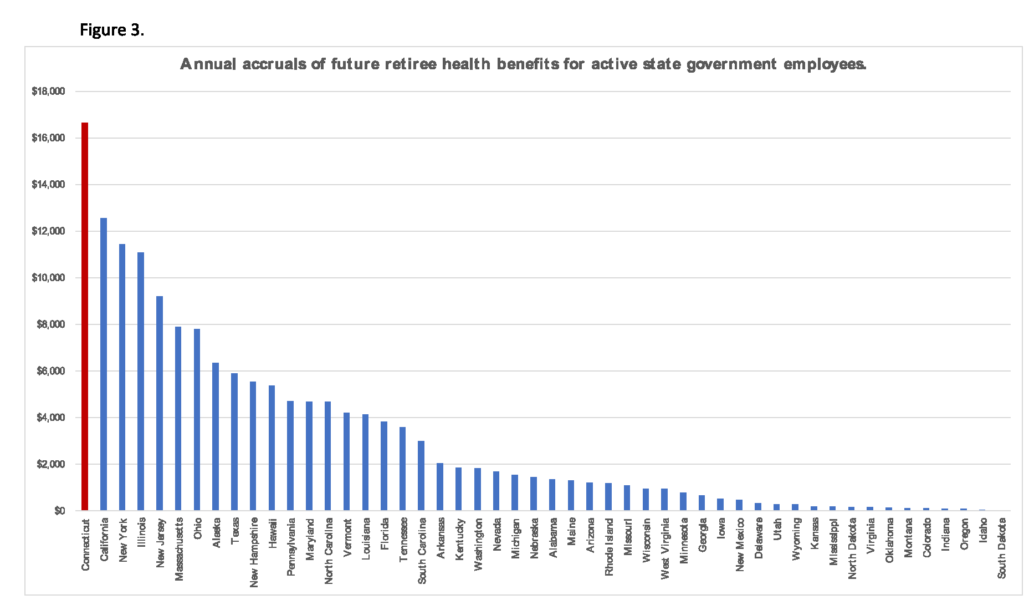
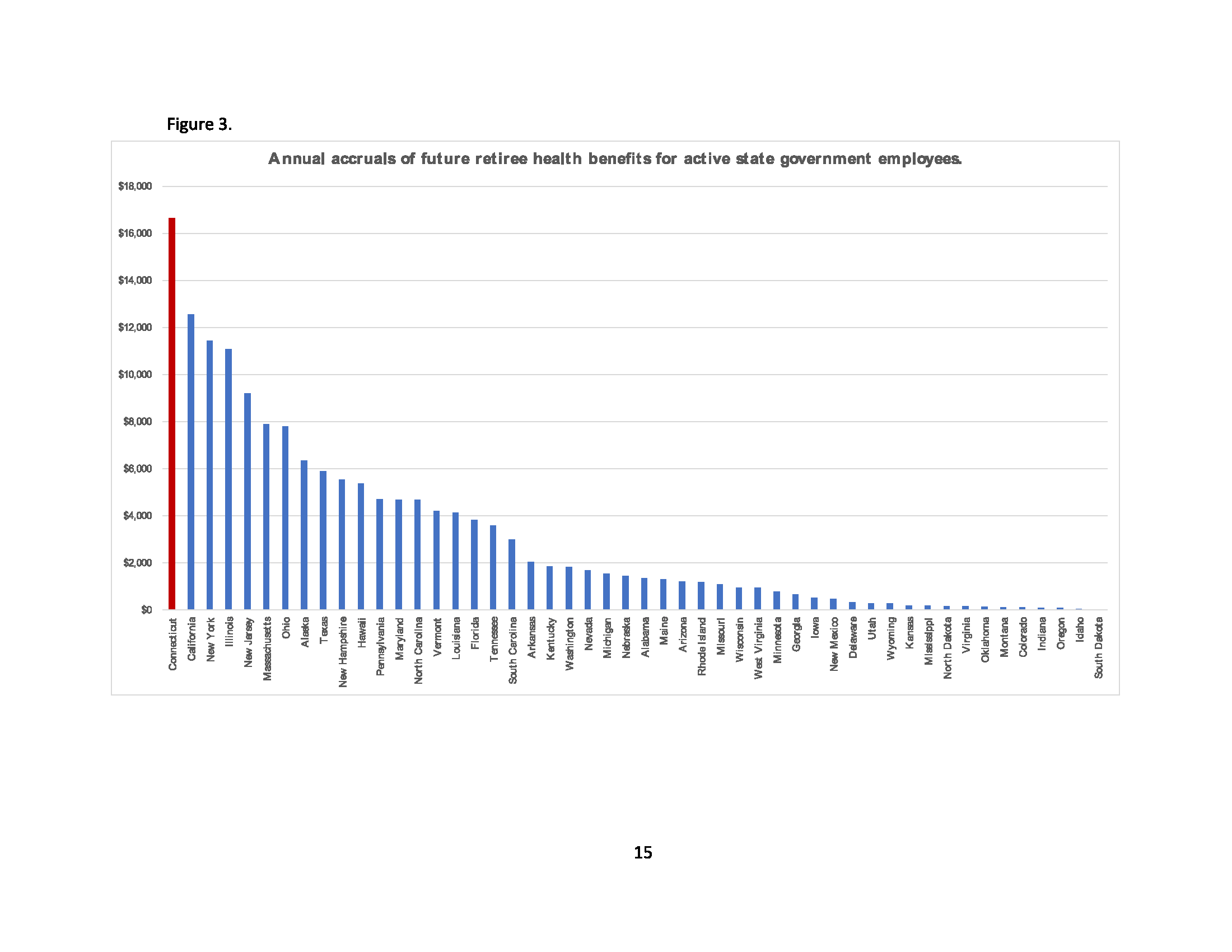
In 50-state analyses in 2021 and in 2025, national retirement benefits expert, Dr. Andrew Biggs, found Connecticut state employee retirement health care benefits to be the richest of the 50 states. A Georgetown University study found their health care benefits on the job to be tied with Vermont as the richest. The state’s pension benefits are well above average as well.
As Representative Tina Courpas (R-159) noted in the debate about the recently approved wage agreement, the difference between Connecticut and other states is that other states with generous benefits have mostly funded their benefits. Connecticut has not. The state employee pension fund is only about 60% funded, according to the last Report of the Actuary. New York, with the third highest wages, has funded 88% of its pension obligations.
Citizens should be concerned. The combination of the highest wages and the most generous and relatively unfunded benefits is a recipe for ultimate disaster.



Red Jahncke is a nationally recognized columnist, who writes about politics and policy. His columns appear in numerous national publications, such as The Wall Street Journal, Bloomberg, USA Today, The Hill, Issues & Insights and National Review as well as many Connecticut newspapers.